THE 15 GREATEST RUGBY PLAYERS OF ALL TIME
PUBLISHED: AUGUST 2026/UPDATED: SEPTEMBER 2026/BY: WE ARE RUGBY
Written and ranked by the WE ARE RUGBY editorial team. Facts are checked against the public record; the order is our judgement call.
Legends. World champions. Game-changers.
Trying to rank more than a century of rugby history is asking for trouble.
So naturally, we did it anyway.
Different eras. Different rules. Different positions. Different opportunities. There is no perfect formula for comparing a Welsh scrum-half from the 1970s with an All Blacks captain from the professional era.
Our ranking considers individual ability, dominance relative to their era, longevity, big-match performances, influence on the game and legacy.
Trophies matter. Statistics matter.
But neither tells the whole story.
These are WE ARE RUGBY's 15 greatest men's rugby union players of all time.
And yes — we already know you disagree.
HOW WE RANKED THEM
We considered peak ability, dominance relative to each player's era, longevity, big-match performances, influence on rugby, leadership, legacy and achievements. This is an editorial ranking, not a mathematical formula — which is exactly why there is plenty to argue about.
Number 15: CHRISTIAN CULLEN🇳🇿
NEW ZEALAND|FULLBACK|1996–2002
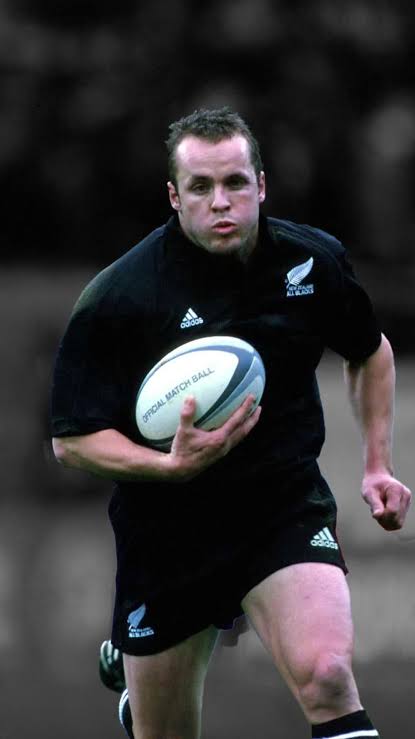
If you're building a rugby player from scratch to run from deep, you could do a lot worse than start with Christian Cullen.
The Paekākāriki Express had acceleration, balance, vision and an extraordinary ability to find space where there appeared to be none. Cullen scored 46 tries in just 58 tests for the All Blacks — an outrageous strike rate for a fullback.
His international career ended far earlier than his talent deserved, which hurts his position on this list.
At his peak, though?
We think Christian Cullen is the greatest fullback rugby has seen.
Number 14: MICHAEL JONES🇳🇿
NEW ZEALAND|FLANKER|1987–1998
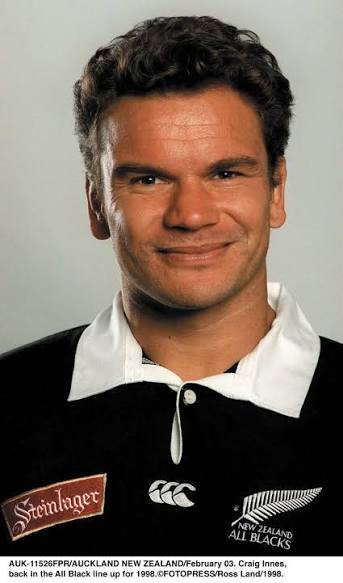
There are great players, and there are players who change how a position is played.
Michael Jones belongs in the second category.
His athleticism, fitness and instincts helped revolutionise openside-flanker play. On his All Blacks test debut at the inaugural Rugby World Cup in 1987, Jones scored the first try in Rugby World Cup history. He scored again in the final as New Zealand became world champions.
Injuries — and his decision not to play on Sundays — restricted his international opportunities.
Without those limitations, Jones may sit considerably higher on lists like this.
Number 13: JOOST VAN DER WESTHUIZEN🇿🇦
SOUTH AFRICA|SCRUM-HALF|1993–2003
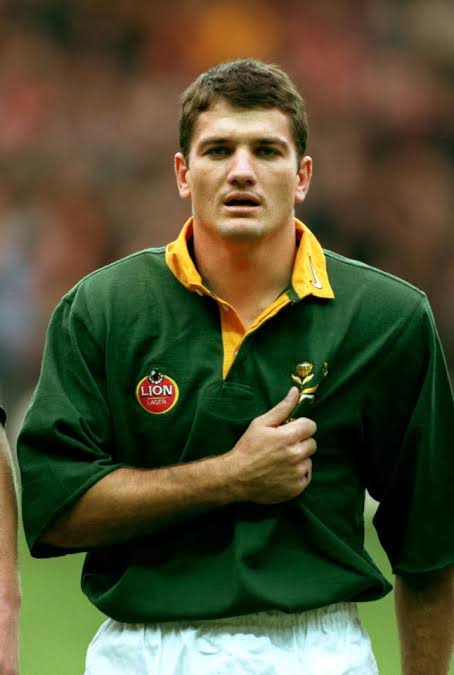
Joost changed expectations of what a scrum-half could be.
Big, aggressive and fearless, he wasn't content merely delivering quick ball to the men outside him. He attacked gaps himself, defended ferociously and had the finishing instincts of an outside back.
Van der Westhuizen scored 38 tries in 89 tests and was a crucial member of South Africa's 1995 World Cup-winning side. His defensive work against Jonah Lomu in that famous final remains part of Springbok folklore.
He was a scrum-half opponents had to fear.
There haven't been many like him since.
Number 12: BRIAN O'DRISCOLL🇮🇪
IRELAND|CENTRE|1999–2014
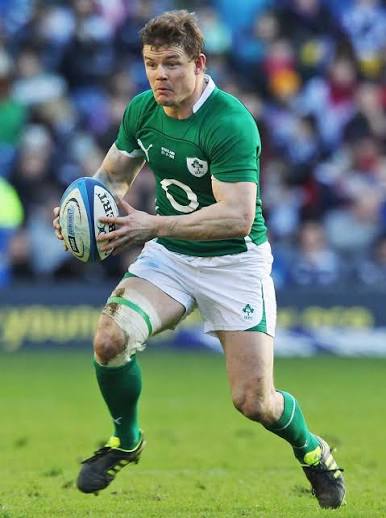
For well over a decade, Brian O'Driscoll was the face of Irish rugby.
He possessed almost everything you could ask for from an outside centre: acceleration, footwork, anticipation, handling, defensive intelligence and a remarkable ability to win turnovers for a back.
O'Driscoll finished with 133 Ireland caps and 46 tries, while adding eight tests across four British & Irish Lions tours. In 2009 he captained Ireland to their first Grand Slam in 61 years.
The longevity matters.
But so does the magic.
At his best, BOD could change a test match by himself.
Number 11: FRIK DU PREEZ🇿🇦
SOUTH AFRICA|LOCK / FLANKER|1961–1971
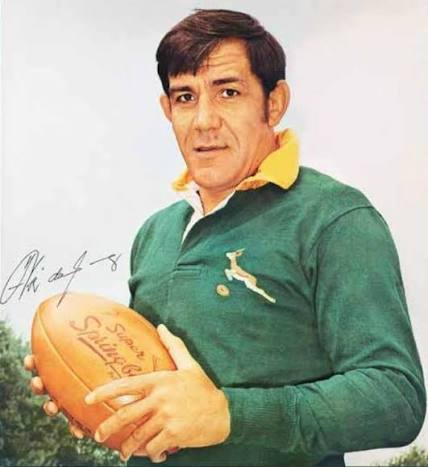
Modern audiences sometimes overlook Frik du Preez.
They shouldn't.
A forward who could run, kick, handle and dominate physically, du Preez was astonishingly versatile for his era. He retired as South Africa's most-capped test player, and in 2000 South African rugby supporters voted him their greatest player of the 20th century.
Greatness didn't begin with professionalism.
Number 10: JOHN EALES🇦🇺
AUSTRALIA|LOCK|1991–2001
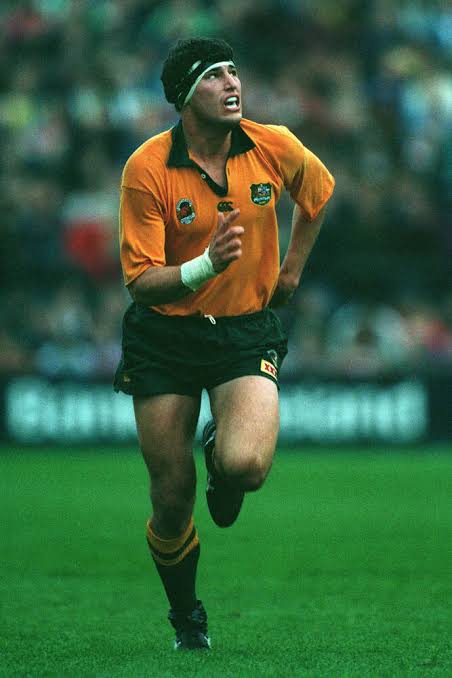
His famous nickname said it all:
Nobody.
Because nobody's perfect.
John Eales got remarkably close.
An elite lineout forward, outstanding leader and — almost absurdly for a lock — international-class goal-kicker, Eales accumulated 173 test points.
More importantly, he won Rugby World Cups in 1991 and 1999, captaining Australia to the second.
When leadership, skill, intelligence and winning are all part of the equation, Eales has to be in the conversation.
Number 9: COLIN MEADS🇳🇿
NEW ZEALAND|LOCK|1957–1971
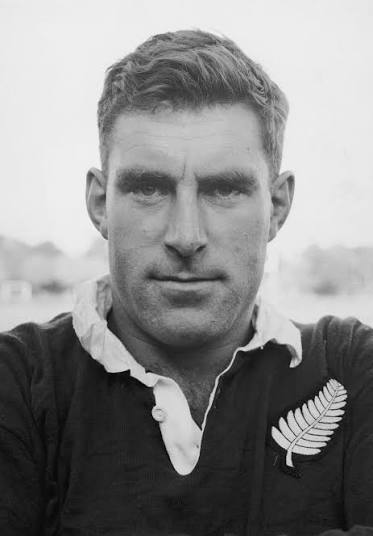
Before McCaw. Before Carter. Before Lomu.
There was Pinetree.
Colin Meads became the embodiment of the old-school All Black: uncompromising, durable and relentlessly competitive.
His international career stretched across 14 years and three decades. He played 133 matches for the All Blacks, including 55 tests, and captained his country. In 1999, the New Zealand Rugby Football Union named him its Player of the Century.
Comparing eras is almost impossible.
But you cannot tell the story of New Zealand rugby greatness without Colin Meads.
Number 8: DANIE GERBER🇿🇦
SOUTH AFRICA|CENTRE|1980–1992
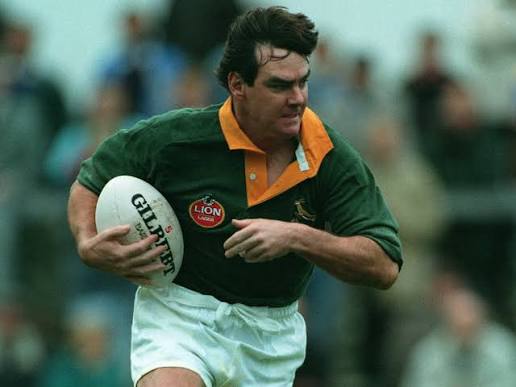
Danie Gerber's international record comes with one enormous asterisk.
He was denied the international career his talent deserved.
South Africa's sporting isolation meant Gerber played just 24 tests across a career spanning more than a decade. Judging him purely by caps would therefore completely miss the point.
Gerber was a devastating combination of pace, power, balance and footwork. At outside centre he could run around defenders, through them, or simply leave them behind. He scored 19 tries in those 24 tests — an extraordinary return for a centre playing in that era.
And when South Africa returned to official international rugby in 1992, Gerber was still there. At 34, he scored two tries against New Zealand in the Springboks' comeback test at Ellis Park.
The tragedy of Gerber's career is that rugby never got to see his prime tested consistently against the world's best.
But greatness isn't determined solely by opportunity.
Those who watched Gerber at his peak saw one of the most complete attacking centres rugby has produced.
WE ARE RUGBY has Danie Gerber at #8 — and as the greatest outside centre of all time.
Number 7: BARRY JOHN🏴
WALES|FLY-HALF|1966–1972
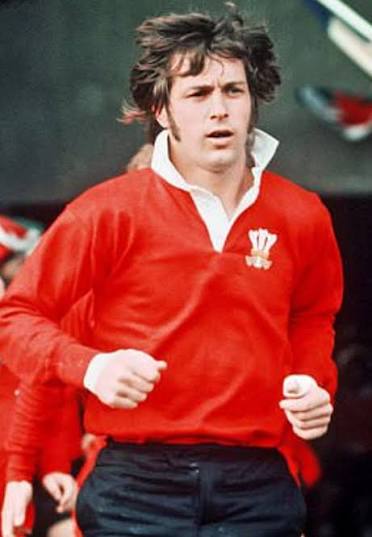
The King.
Barry John's international career was remarkably short — but what he achieved within it established a reputation that has survived for more than half a century.
John possessed exceptional balance, vision, hands and the ability to kick off either foot. His partnership with Gareth Edwards became one of rugby's defining half-back combinations.
But the 1971 British & Irish Lions tour of New Zealand elevated him into rugby immortality. His performances were so commanding that the New Zealand press christened him “The King.”
He retired at just 27.
Sometimes greatness doesn't require longevity.
Sometimes the peak is enough.
Number 6: BRYAN HABANA🇿🇦
SOUTH AFRICA|WING|2004–2016
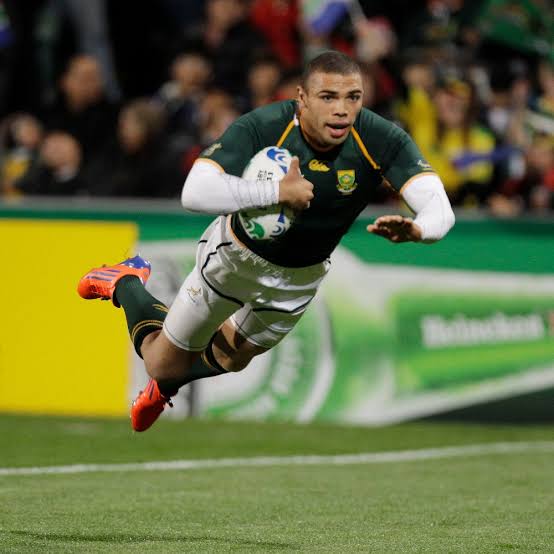
Everyone knew Bryan Habana was fast.
That wasn't the scary part.
The scary part was that he knew exactly how to use it.
Habana scored 67 tries in 124 tests for South Africa. At the 2007 Rugby World Cup he scored eight tries as the Springboks became world champions and was subsequently named World Rugby Player of the Year.
Across his World Cup career he scored 15 tries, drawing level with Jonah Lomu's then men's tournament record.
Elite speed. Elite anticipation. Elite finishing.
One of the greatest wings the sport has produced.
Number 5: ANTOINE DUPONT🇫🇷
FRANCE|SCRUM-HALF|2017–present
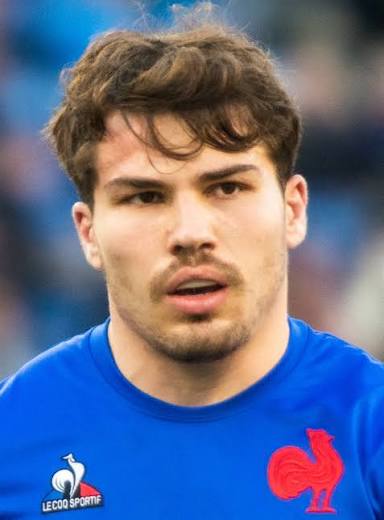
Yes.
Fifth. Already.
And this may be the selection that gets us into the most trouble.
Antoine Dupont combines skills that aren't supposed to exist in the same scrum-half: explosive acceleration, ridiculous support lines, kicking off either foot, breakdown strength, defensive power and the ability to see opportunities before everyone else.
He was named World Rugby Men's 15s Player of the Year in 2021. He then crossed codes within the sport, helped France win Olympic sevens gold in Paris in 2024, and became the first male player to win World Rugby Player of the Year honours in both 15s and sevens.
His story isn't finished.
That's precisely what makes putting him at five so dangerous.
He could finish much higher.
Number 4: JONAH LOMU🇳🇿
NEW ZEALAND|WING|1994–2002
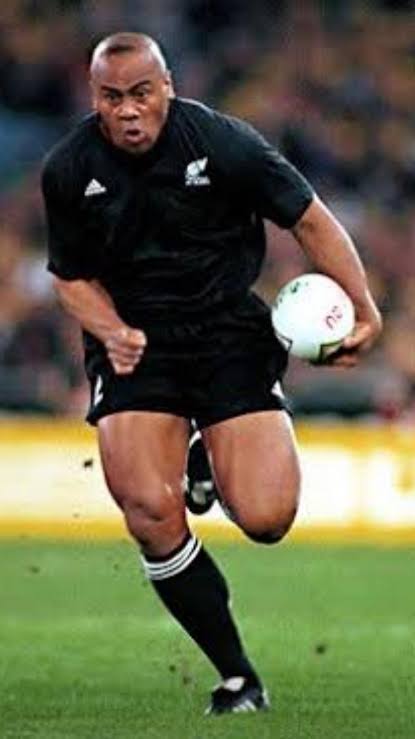
Some players dominate rugby.
Jonah Lomu changed rugby.
At the 1995 World Cup, the 20-year-old became something the sport had never really possessed before: a truly global superstar.
Size wasn't new.
Speed wasn't new.
Nobody had combined the two quite like this.
Lomu scored seven tries at the 1995 World Cup and eight more in 1999 — 15 World Cup tries across just two tournaments. He finished his All Blacks career with 37 tries from 63 tests.
His career was severely affected by kidney disease, meaning the statistics will never adequately represent what rugby witnessed at his peak.
There have been players with longer careers.
There have been players with more trophies.
But has any rugby player ever made the world stop and watch quite like Jonah Lomu?
We don't think so.
Number 3: GARETH EDWARDS🏴
WALES|SCRUM-HALF|1967–1978
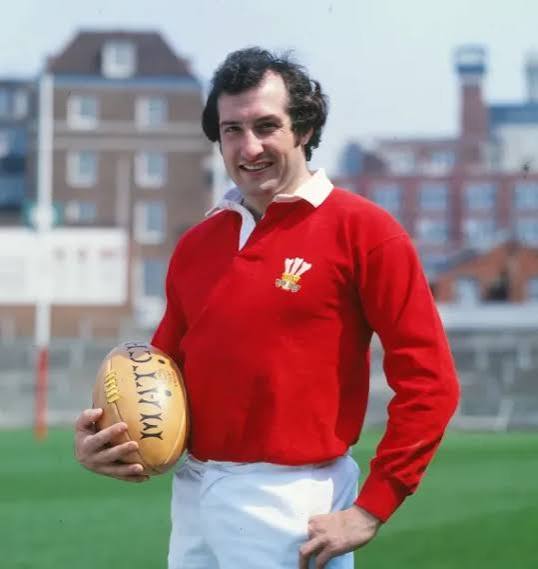
Before anyone declares this list guilty of recency bias, meet Gareth Edwards.
Edwards won 53 consecutive caps for Wales, scored 20 tries, won seven Five Nations titles and three Grand Slams, and starred for the victorious British & Irish Lions of 1971 and 1974.
He had speed.
Power.
An exceptional pass.
A kicking game.
And the instinct to attack when everybody else saw danger.
His reputation has survived generations for a reason.
More than 50 years after his prime, we still have him on the podium.
That tells you everything.
Number 2: DAN CARTER🇳🇿
NEW ZEALAND|FLY-HALF|2003–2015
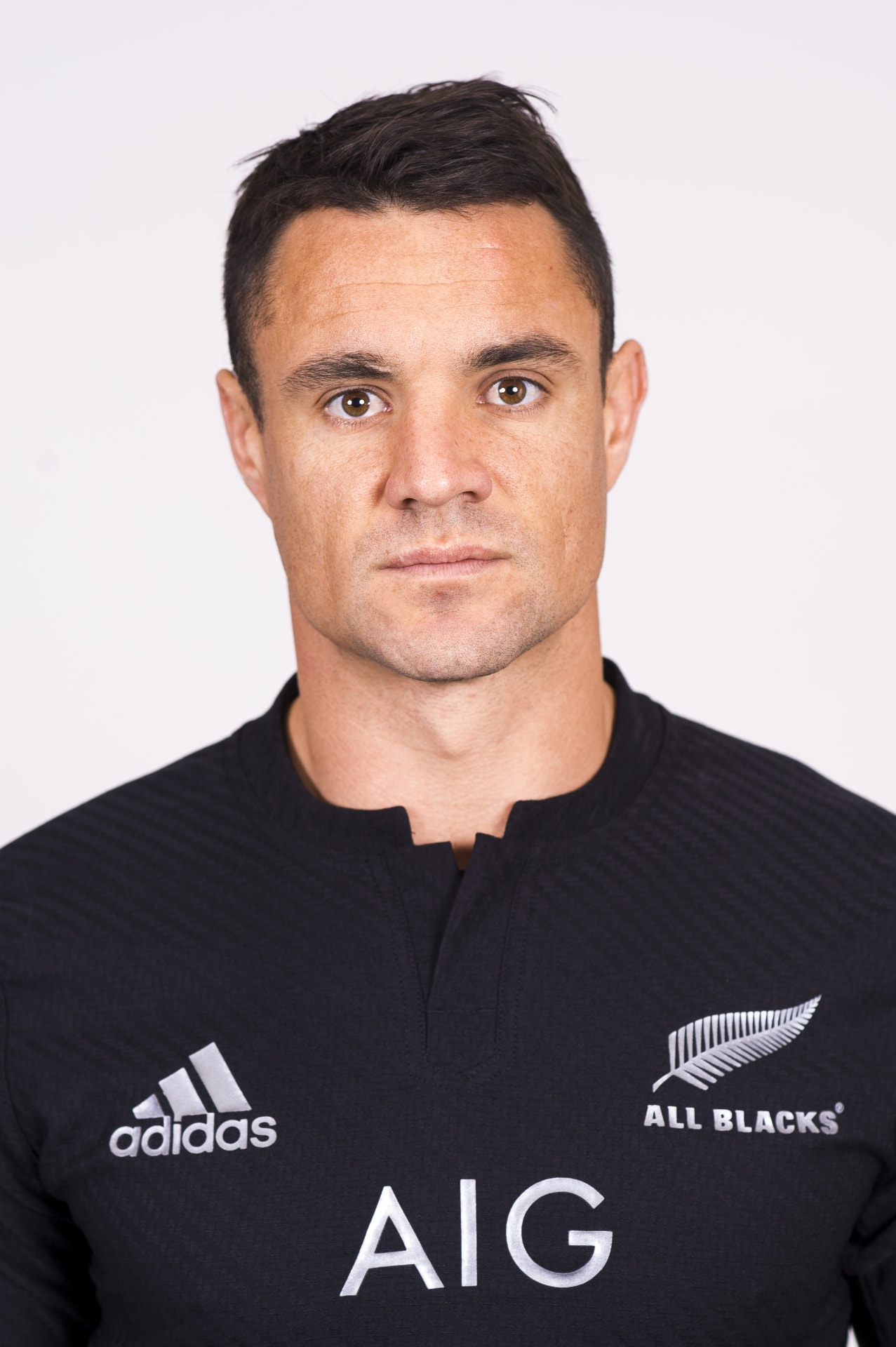
If you wanted the closest thing rugby has produced to the complete fly-half, you might end up with Dan Carter.
He could control territory.
Break the line.
Put players through gaps.
Defend.
Kick goals under suffocating pressure.
And then do it all again when the stakes were highest.
Carter retired from test rugby with 1,598 points, 112 caps, two World Cup winner's medals and three World Rugby Player of the Year awards.
His 33-point performance against the British & Irish Lions in Wellington in 2005 remains one of the benchmark individual performances in test rugby.
Then came 2015.
After injury denied him the defining stages of New Zealand's 2011 triumph, Carter drove the All Blacks through the knockout stages four years later and scored 19 points in the World Cup final against Australia.
For skill, composure, consistency and control of a rugby match:
Carter is our greatest number 10 ever.
Only one player beats him.
Number 1: RICHIE McCAW🇳🇿
NEW ZEALAND|FLANKER|2001–2015
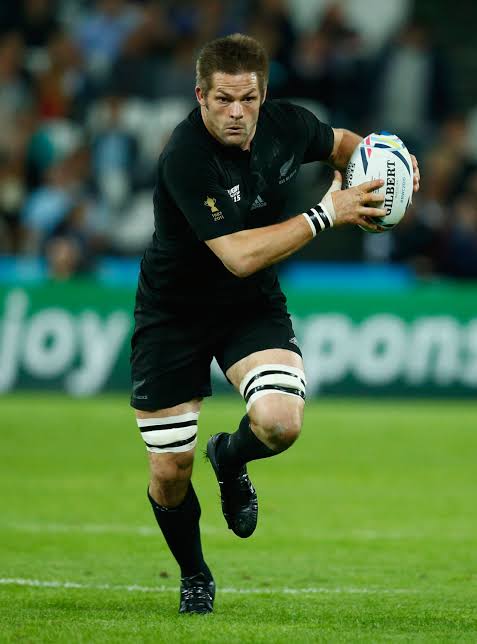
There are more naturally gifted rugby players on this list.
There are faster players.
Better kickers.
More devastating runners.
But if the question is:
Who is the greatest rugby player of all time?
Our answer is Richie McCaw.
McCaw played 148 tests for New Zealand.
He captained the All Blacks 110 times.
He won World Rugby Player of the Year three times.
And he became the first player to captain his country to two Rugby World Cup titles, in 2011 and 2015.
But reducing McCaw to trophies misses what made him extraordinary.
He mastered rugby's most chaotic territory: the breakdown.
He understood referees. He understood space. He understood momentum. And when test matches descended into the final ten minutes of violence, fatigue and pressure, McCaw seemed to become more influential rather than less.
Opposition supporters hated seeing him hovering over the ball.
Opposition coaches built plans specifically to remove him.
And generation after generation of All Blacks followed him.
There may have been players with a greater individual highlight reel.
But nobody combined performance, longevity, leadership and winning quite like Richie McCaw.
WE ARE RUGBY's greatest player of all time.
PLAY THE INTERACTIVE CHALLENGES
Reading our order is one thing. Making the calls yourself, one player at a time, is another.
GREATEST ALL BLACKS
Lomu, Carter, Meads, McCaw, Cullen. Five spots. Good luck.
GREATEST WINGERS EVER
Campese, Caucau, Shane Williams, Lomu, Habana — one at a time.
GREATEST SPRINGBOK FLY-HALVES
South Africa's most argued-about position, settled by you.
RELATED RANKINGS
- THE GREATEST RUGBY XV OF ALL TIMECOMING SOON
- THE 15 GREATEST SPRINGBOKS OF ALL TIME
- THE 15 GREATEST ALL BLACKS OF ALL TIME
- THE 15 GREATEST FLY-HALVES OF ALL TIME