THE 15 GREATEST FLY-HALVES OF ALL TIME
PUBLISHED: 16 SEPTEMBER 2026/BY: WE ARE RUGBY
Original ranking and commentary by David Miller for WE ARE RUGBY. The order is David’s judgement call.
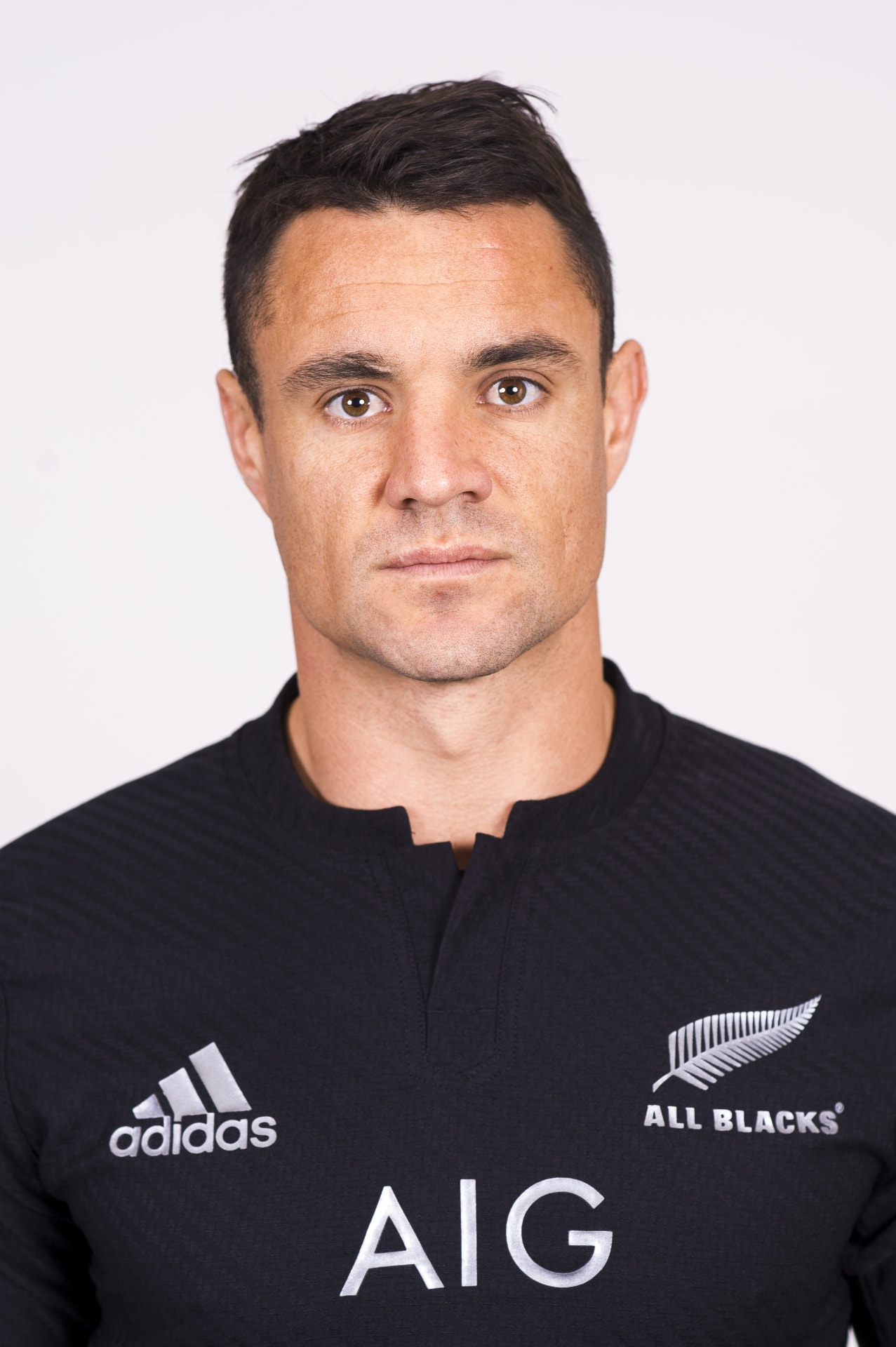
Right.
Let's get the obvious question out of the way.
Carter or Wilkinson?
I've gone Carter.
But that's nowhere near the only argument this list is going to start.
Barry John at No.3. Stephen Larkham at No.4. Beauden Barrett only eighth. Handré Pollard — a man with two World Cup winner's medals — down at No.14.
And Johnny Sexton?
He's just scraped in at No.15.
This isn't simply about points scored, trophies won or how long somebody played Test rugby.
I'm looking at the player: ability, influence, control, attacking threat, performances under pressure, longevity, impact on their era and that almost indefinable quality the truly great No.10s possess.
The ability to make a rugby match theirs.
Let's go.
Number 15: JOHNNY SEXTON
IRELAND|FLY-HALF|2009–2023
Starting with Sexton at No.15 should get Ireland warmed up nicely.
Because his achievements are enormous.
Sexton was the driving force behind one of the greatest periods in Irish rugby history. Fiercely competitive, tactically superb and completely comfortable carrying the responsibility that comes with playing Test rugby at 10.
He controlled territory brilliantly, attacked the line intelligently and possessed an extraordinary ability to impose himself on enormous matches.
And the longevity was remarkable.
So why only 15th?
Because look at the names coming.
This isn't disrespecting Sexton.
It's showing how ridiculous the competition is.
Number 14: HANDRÉ POLLARD
SOUTH AFRICA|FLY-HALF|2014–Present

Two-time World Cup winner.
And I've put him fourteenth.
Here come the comments.
Pollard's case is fascinating because his greatness isn't built around being the most spectacular attacking fly-half rugby has seen.
It's built around something perhaps even more valuable.
When the pressure becomes unbearable, Pollard delivers.
His composure, physicality, tactical kicking and goal-kicking have made him an extraordinary Test-match operator.
And his role in South Africa's 2023 World Cup triumph was remarkable, particularly after initially missing selection for the tournament.
Would I choose some players above him if I needed somebody to unlock a defence?
Yes.
Would I want Pollard standing over a crucial kick with a World Cup on the line?
Absolutely.
Number 13: FINN RUSSELL
SCOTLAND|FLY-HALF|2014–Present
Now we're going in completely the opposite direction.
Finn Russell sees things.
Gaps that don't appear to exist. Passes most fly-halves wouldn't attempt. Kicks that can look completely insane until somebody catches the ball exactly where Russell apparently knew they would.
At his best, he's one of the most creative No.10s I've watched.
And importantly, the older Russell has become, the more complete his game has become.
The instinct remains.
But there's now considerably more control around it.
Some people will think putting him among the 15 greatest fly-halves ever is too aggressive.
Fair enough.
I'm backing the talent.
Russell gets in.
Number 12: ANDREW MEHRTENS
NEW ZEALAND|FLY-HALF|1995–2004
Playing fly-half for the All Blacks comes with pressure.
Andrew Mehrtens made it look remarkably normal.
Elegant, intelligent and beautifully balanced, Mehrtens could control matches with his kicking while still possessing the passing game and vision required to unleash some frightening New Zealand backlines.
And then there was his goal-kicking.
When points were available, Mehrtens usually took them.
He wasn't the explosive running threat of a Carter or Barrett.
He didn't need to be.
He understood Test rugby.
Territory. Tempo. Pressure. Scoreboard.
And for a long period, he was one of the most dependable No.10s in the world.
Number 11: MARK ELLA
AUSTRALIA|FLY-HALF|1980–1984
This is where comparing careers becomes dangerous.
Mark Ella didn't have the enormous Test career of many players on this list.
But bloody hell, could he play rugby.
Ella saw space differently.
His passing, running lines, support play and ability to bring players around him into the game made him one of the most naturally gifted attacking fly-halves Australia has produced.
He played with an instinctive understanding of where the ball needed to go next.
And his performances on Australia's famous 1984 Grand Slam tour remain a huge part of his legacy.
If this list were based purely on natural attacking ability?
Ella would be much higher.
Number 10: JONATHAN DAVIES
WALES|FLY-HALF|1985–1997
Before anyone starts typing:
Yes, Jonathan Davies.
One of the most naturally gifted Welsh backs of his generation, Davies had pace, balance, vision and a wonderful ability to attack defensive lines.
He could kick beautifully.
He could create.
And he could turn a seemingly harmless situation into an attacking opportunity almost instantly.
His career famously crossed rugby union and rugby league, meaning his union résumé looks different from some of the long international careers elsewhere on this list.
But I'm ranking rugby players, not spreadsheets.
At his best, Davies was special.
Proper special.
Number 9: PHIL BENNETT
WALES|FLY-HALF|1969–1978
Imagine replacing Barry John.
That's a fairly unpleasant assignment.
Phil Bennett managed it.
And rather than trying to become another Barry John, he created his own legacy.
Bennett was elusive, creative and wonderfully instinctive. His footwork could make defenders look completely helpless, and his attacking imagination suited one of the most celebrated eras Welsh rugby has ever produced.
Then there's that Barbarians move against New Zealand in 1973.
Bennett's sidesteps started one of rugby's most famous tries.
But he was far more than one beautiful highlight.
He was a magnificent fly-half in his own right.
Number 8: BEAUDEN BARRETT
NEW ZEALAND|FLY-HALF / FULLBACK|2012–Present
Two-time World Rugby Player of the Year.
And I've got him eighth.
That's how good this list is.
At his peak, Beauden Barrett possessed something very few fly-halves in history could match:
Raw speed.
Not fly-half speed.
Back-three speed.
Give Barrett a broken defensive line and the game could disappear in seconds.
But he also developed the passing, kicking and game management required to direct the All Blacks.
His versatility perhaps complicates the argument because so much of his career has included time at fullback.
But as a rugby player wearing 10?
Absolutely devastating.
Eight feels low.
I know.
Number 7: MICHAEL LYNAGH
AUSTRALIA|FLY-HALF|1984–1995
Michael Lynagh could run a Test match.
That's the phrase I'd use.
Calm, intelligent and technically excellent, Lynagh possessed the tactical awareness required of a great fly-half while still offering genuine attacking quality.
He could distribute.
He could kick.
He could score.
And most importantly, he understood what the match required.
Lynagh became a central figure in an increasingly powerful Australian side and helped the Wallabies win the 1991 World Cup.
There were flashier No.10s.
There were faster No.10s.
But when you're talking about complete international fly-halves?
Lynagh belongs right up there.
Number 6: HUGO PORTA
ARGENTINA|FLY-HALF|1971–1990
If Hugo Porta had played his Test rugby for New Zealand, South Africa or Wales, I wonder how differently rugby history would talk about him.
Because Porta was magnificent.
He carried enormous responsibility for Argentina at a time when the Pumas didn't possess the depth and structures of rugby's traditional powers.
And still he could control matches against them.
Brilliant tactical kicker. Outstanding goal-kicker. Intelligent distributor. Genuine attacking threat.
Porta had the complete toolkit.
His performances helped establish Argentina as a nation capable of seriously challenging rugby's elite.
He wasn't simply a great Argentine fly-half.
He was one of the great fly-halves. Period.
Number 5: NAAS BOTHA
SOUTH AFRICA|FLY-HALF|1980–1992
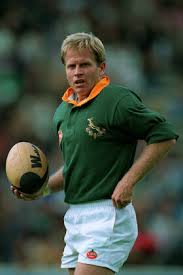
Naas Botha knew exactly what he wanted to do to you.
And then did it anyway.
Territory.
Pressure.
Scoreboard.
Repeat.
His kicking ability was extraordinary, whether from the tee, out of hand or through the drop goal.
But describing Naas simply as a kicking fly-half misses the point.
His tactical understanding was elite.
He could dictate where a match was played and force opponents into the type of contest South Africa wanted.
And like several great Springboks of his generation, international isolation severely restricted his Test career.
The numbers therefore don't tell the story.
The player does.
Naas at five.
Number 4: STEPHEN LARKHAM
AUSTRALIA|FLY-HALF|1996–2007
This might be my favourite argument on the list.
Because I've got Stephen Larkham fourth.
And yes, above Botha, Porta, Lynagh, Barrett and Ella.
Larkham didn't look like a traditional fly-half.
He was tall, deceptively quick and seemed to glide through defensive lines.
His running game from 10 was exceptional.
So was his ability to create space for the extraordinary Wallabies backs playing around him.
And then there's the irony.
A man not exactly renowned as rugby's greatest drop-goal specialist produced an enormous one against South Africa in the 1999 World Cup semi-final.
From miles out.
In extra time.
Of course he did.
At his best, Larkham was beautiful to watch.
I'm putting him fourth and I'm not moving him.
Number 3: BARRY JOHN
WALES|FLY-HALF|1966–1972
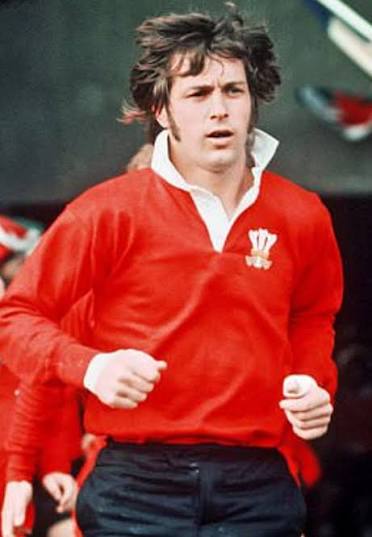
The King.
There's a reason Barry John acquired that nickname.
He played fly-half with an ease that became almost mythical.
Balance. Vision. Timing. Kicking. Running.
Everything appeared effortless.
John could control a match without looking like he was trying to control it.
And on the British & Irish Lions' famous 1971 tour of New Zealand, his performances elevated his reputation to another level.
The difficult part for modern supporters is separating the player from the legend that grew around him.
But watch what footage exists.
Watch the balance.
Watch the time he appears to have on the ball.
Watch the defenders hesitate.
Barry John wasn't merely great for his era.
He helped define what greatness at fly-half looked like.
Number 2: JONNY WILKINSON
ENGLAND|FLY-HALF|1998–2011
You know the moment.
Sydney.
Extra time.
Right foot.
Drop goal.
World champions.
But reducing Jonny Wilkinson to that single kick would be incredibly unfair.
He was obsessive about preparation, extraordinarily accurate from the tee and perhaps the most ferocious defensive fly-half I've ever seen.
Wilkinson tackled like a back-rower.
He controlled territory.
He absorbed pressure.
And when England needed points, there was an extraordinary sense that he would find them.
Injuries took enormous chunks out of his career, which makes what he achieved even more impressive.
And years after 2003, he was still producing elite rugby in Europe.
If I needed one kick to save my life?
I'm probably giving Jonny the ball.
But if I'm choosing the greatest overall fly-half I've ever seen?
There's one man ahead of him.
THE NUMBER ONE REVEAL
Number 1: DAN CARTER
NEW ZEALAND|FLY-HALF|2003–2015
The greatest fly-half of all time.
For me, Dan Carter is what happens when almost every quality you could possibly want from a No.10 ends up in the same player.
Passing.
Running.
Goal-kicking.
Tactical kicking.
Defence.
Decision-making.
Composure.
Athleticism.
And the ability to produce all of it when the level of rugby became frighteningly high.
His performance against the British & Irish Lions in Wellington in 2005 remains one of the finest individual displays I've seen from a fly-half.
Then came 2015.
After injury had robbed him of the knockout stages four years earlier, Carter finally got his opportunity to control a World Cup final.
And he delivered.
Completely.
Wilkinson was extraordinary.
Barry John was magical.
Larkham changed what attacking from 10 could look like.
Naas could control you.
Porta could carry a nation.
But if I'm building a rugby team and I can choose any fly-half in history at his absolute best?
Give me Dan Carter.
Every single time.
PLAY THE INTERACTIVE CHALLENGES
Reading our order is one thing. Making the calls yourself, one player at a time, is another.
GREATEST SPRINGBOK FLY-HALVES
Morné Steyn, Naas Botha, Henry Honiball, Handré Pollard and André Pretorius. Five spots. No going back.
GREATEST ALL BLACKS
Lomu, Carter, Meads, McCaw, Cullen. Five spots. Good luck.